
Power generation
Power Plant Outage Management: Planned and Forced
In power generation a planned outage is scheduled well in advance, with a predetermined duration and a work scope fixed beforehand; it can last several weeks and occurs once or twice a year. Maintenance outages can wait a few days but not until the next planned outage, and forced outages cannot wait.
US reactors refuel every 18 to 24 months; for other technologies there is no published interval.
How MaintWiz helps: Outages tie dozens of packages to one return-to-service date. The MaintWiz shutdown module gives plant teams one plan for scope, schedule, permits, spares and execution, from the first work package to close-out. See the module · Get the data sheet
By Jai Balachandran · Published · Last reviewed
What MaintWiz adds:Scope, schedule and permits in one planSpares status with SAPReadiness gatesFindings to the planner
Fact block
What do public sources say about power plant outages?
Public sources describe a planned outage as scheduled well in advance, with a predetermined duration, lasting several weeks and occurring once or twice a year, with turbine and boiler overhauls and nuclear refueling as typical examples. 1
For treatment plants, see water and wastewater plant outages. For cement and steel plants, see cement plant shutdowns and steel plant shutdowns. Forced outages cost more than planned ones; see planned vs unplanned shutdown cost.
| Item | What public sources say | Source |
|---|---|---|
| Usual term | Planned outage (PO), maintenance outage (MO) and forced outage; nuclear plants say refueling outage | NERC GADS |
| How often | A planned outage is described as occurring only once or twice a year (a reporting definition, not frequency data). US reactors refuel every 18 or 24 months of full-power operation | NERC GADS, EIA |
| How long | A planned outage can last for several weeks. A US reactor refueling outage averaged about two months in EIA's 2011 analysis, recent EIA figures are 34 to 38 days, and some are completed in as few as 10 days | NERC GADS, EIA, EIA 2023 |
| Usual window | Spring and fall, when demand is lowest (ISO New England generators, 2011; US reactors, 2023) | EIA, EIA 2023 |
| Typical planned work | Turbine and boiler overhauls or inspections, testing and nuclear refueling | NERC GADS |
| Reporting driver | NERC GADS reporting has been mandatory since 1 January 2013 for conventional units of 20 MW and larger (United States and Canada) | NERC GADS |
| India boiler driver | A boiler certificate authorizes use for no more than 12 months in most cases (Boilers Act 2025, section 12(6)); commencement depends on central government notification | Boilers Act 2025 |
| Duration or interval by technology | No public, vendor-neutral benchmark found for coal, gas, hydro or wind | Searched; see sources |
Read with care. The NERC wording is a reporting definition used to code events, not a measured frequency, and the EIA figures cover US nuclear and one New England region.
Event types
How are generating unit outages classified?
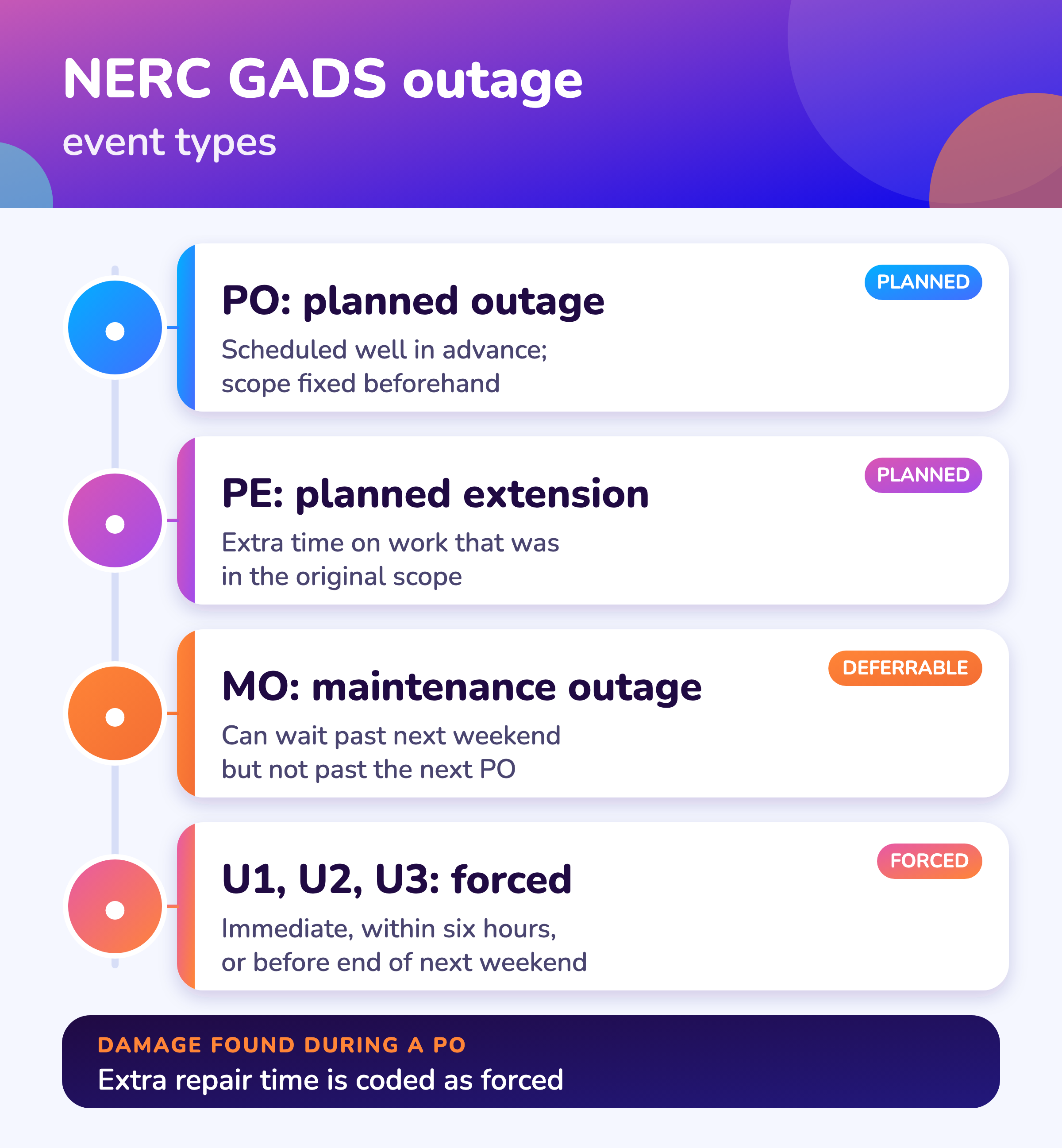
NERC's reporting rules classify outages as planned (PO), planned extension (PE), maintenance (MO) or forced (U1 to U3) according to when the work can happen and whether it was in the original scope. 1
The Indian boiler certificate cycle is explained in annual boiler shutdown in India. Nuclear refueling outage durations are in nuclear refueling outage planning.
| Code | Event | What it means |
|---|---|---|
| PO | Planned outage | Scheduled well in advance, of predetermined duration, with the work scope set in advance |
| PE | Planned outage extension | Extra time to finish work that was in the original scope; the estimated end date must have been set at the start |
| MO | Maintenance outage | Can be deferred beyond the end of the next weekend but must happen before the next planned outage; usually much shorter than a PO |
| U1, U2, U3 | Forced outages | Immediate (U1), delayed within six hours (U2) and postponed to before the end of the next weekend (U3) |
The classification matters because the label changes how a delay is reported. The wider vocabulary is covered in turnaround vs shutdown vs outage.
Software
Can software help with outage management?
Software can hold the frozen task list, the estimated end date and the discovery work log in one place, so extensions and forced events are visible as they happen.
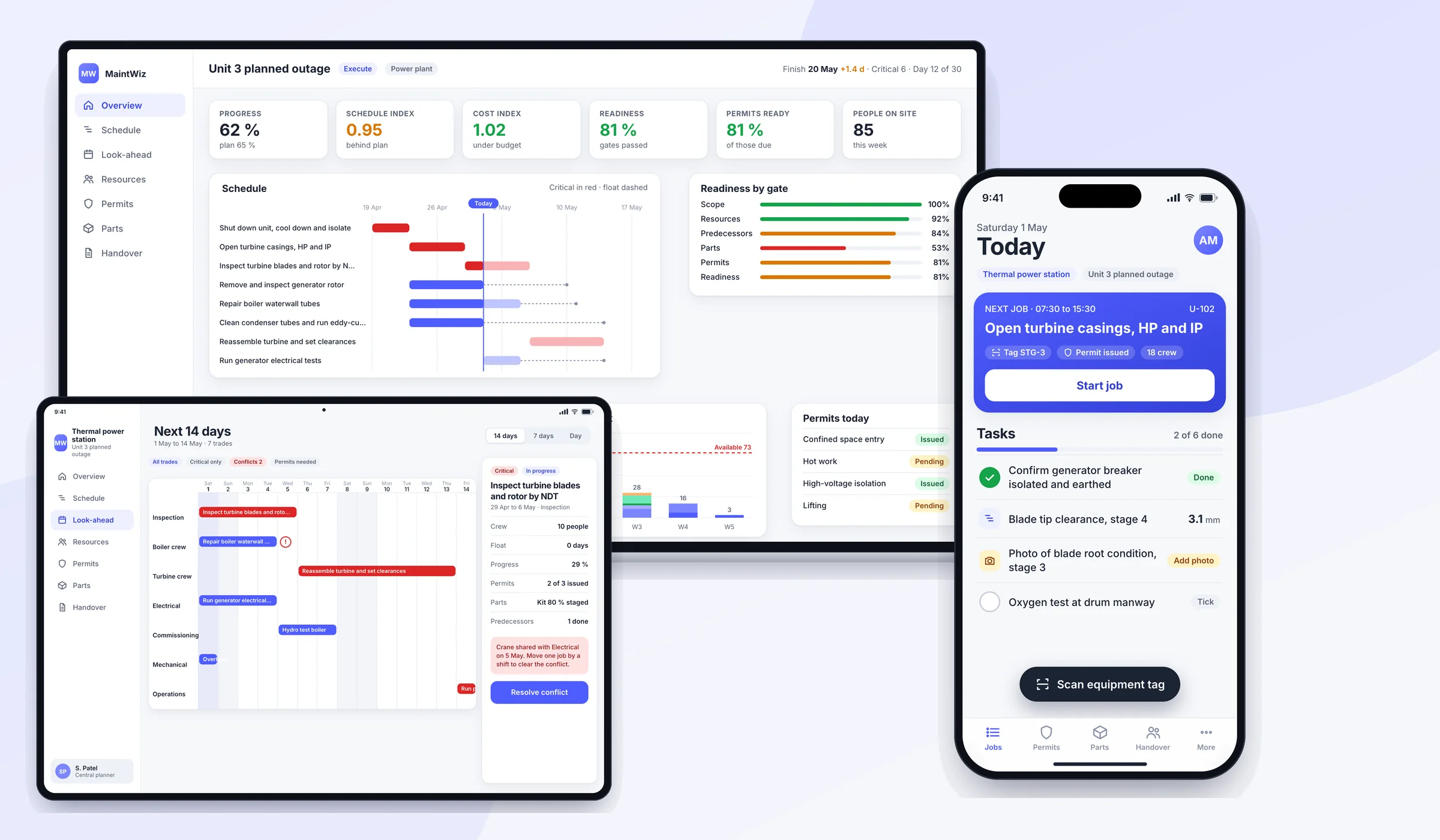
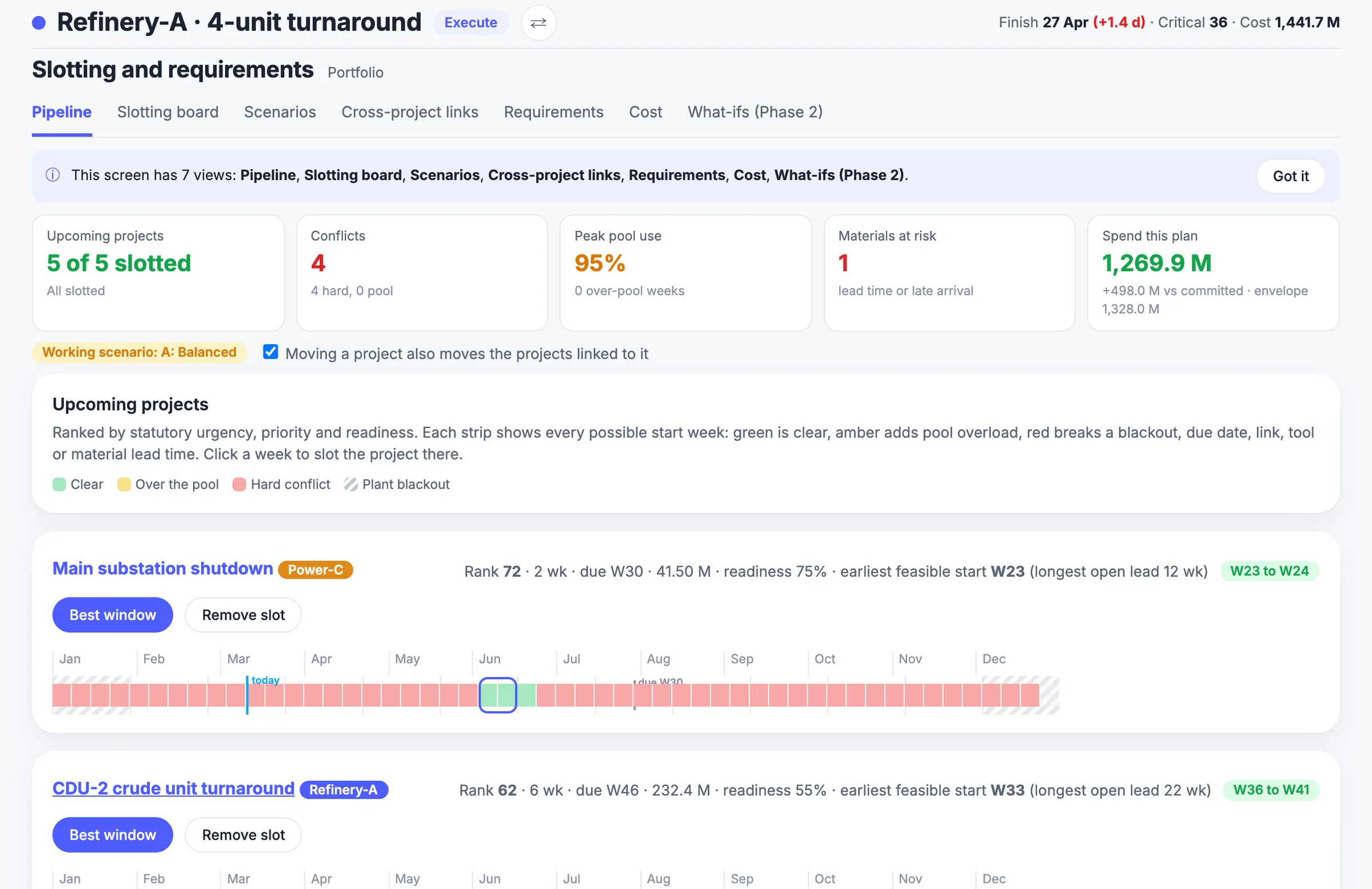
About MaintWiz. MaintWiz is an industrial AI platform with IoT, SAP integration and predictive maintenance (PdM) capabilities. Its shutdown and turnaround module helps plants plan, schedule, execute and close out shutdown work.
Also: product data sheet.
What the shutdown module covers
As described on the MaintWiz shutdown maintenance product page.
- Shutdown calendar and critical-path scheduling, with work order sequencing and dependencies
- Asset prioritization, so the most critical equipment is scoped first
- Resource planning for people, spares, heavy equipment such as cranes, and outsourced vendors
- Electronic permits to work, risk management and contingency plans
- Real-time progress monitoring: schedule adherence, cost variance, quality metrics and risk factors
- Step-by-step checklists, pre-restart testing protocols and post-shutdown analysis
Proof
What MaintWiz customers report
Figures as published in MaintWiz case studies on maintwiz.com. They come from maintenance management projects, not shutdowns.
Scope
How do you keep a power plant outage to its planned scope?
Write the outage scope as individual tasks fixed before the outage starts, because NERC says a general task such as repairing a boiler is not a work scope and that discovery work and re-work are not part of the original scope. 1
US nuclear refueling outage figures and scope are in nuclear refueling outage planning. For UK pressure system examinations see PSSR pressure systems safety regulations in the UK.
NERC adds that if damage found during an inspection extends an outage, the extra repair time is coded as a forced outage, while extra time on a task that was in the original scope is coded as a planned extension. 1 That is why the task list, the estimated end date and a discovery work process should exist before the unit comes off line. See shutdown scope management and shutdown execution.
Timing
When should a generating unit outage be scheduled?
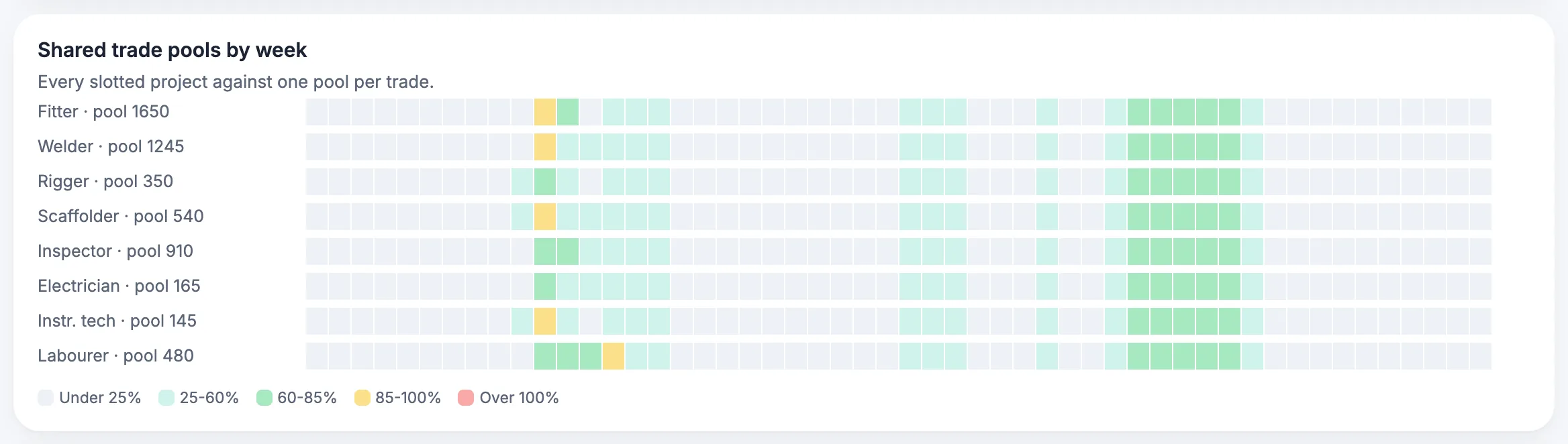
Schedule outages in spring or fall unless a regulation fixes the date: EIA found ISO New England generators and US reactors place maintenance and refueling in those seasons, when demand is lowest. 4,3
For Indian boilers, see annual boiler shutdown in India and annual shutdown planning in India. Refueling outage timing is in nuclear refueling outage planning. Sugar mills with cogeneration plan around the crushing season: sugar mill off-season maintenance.
Where a regulator sets a boiler certificate date, as India's Boilers Act 2025 does with a 12-month certificate in most cases, the date is fixed and the outage is built around it. 5 More on intervals and windows is in how often a plant should shut down.
Checklist
What belongs on a power plant outage checklist?
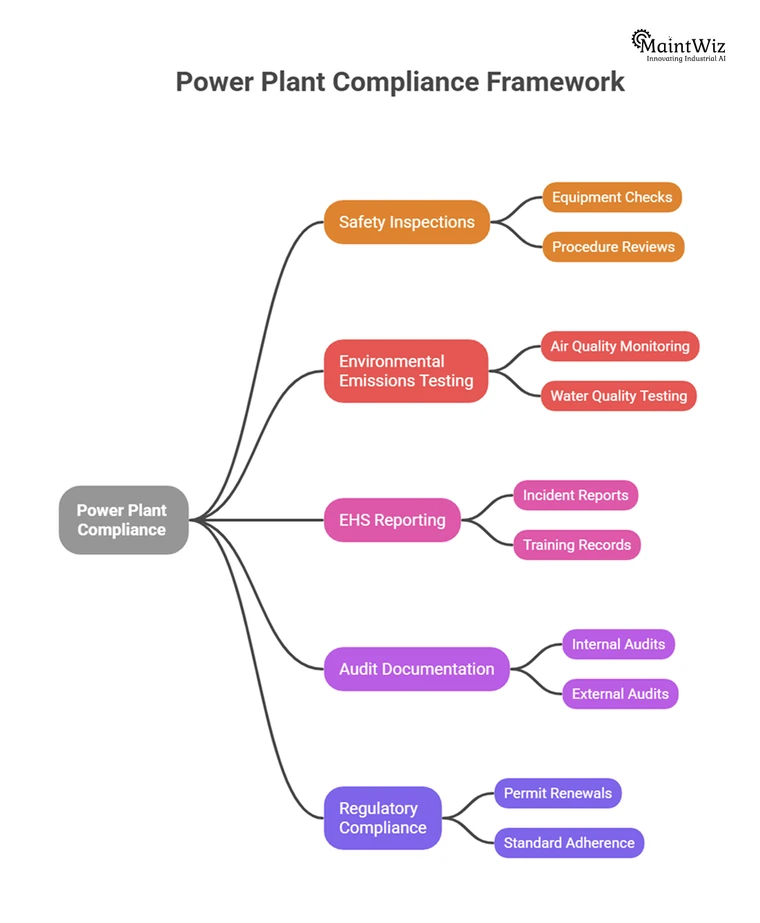
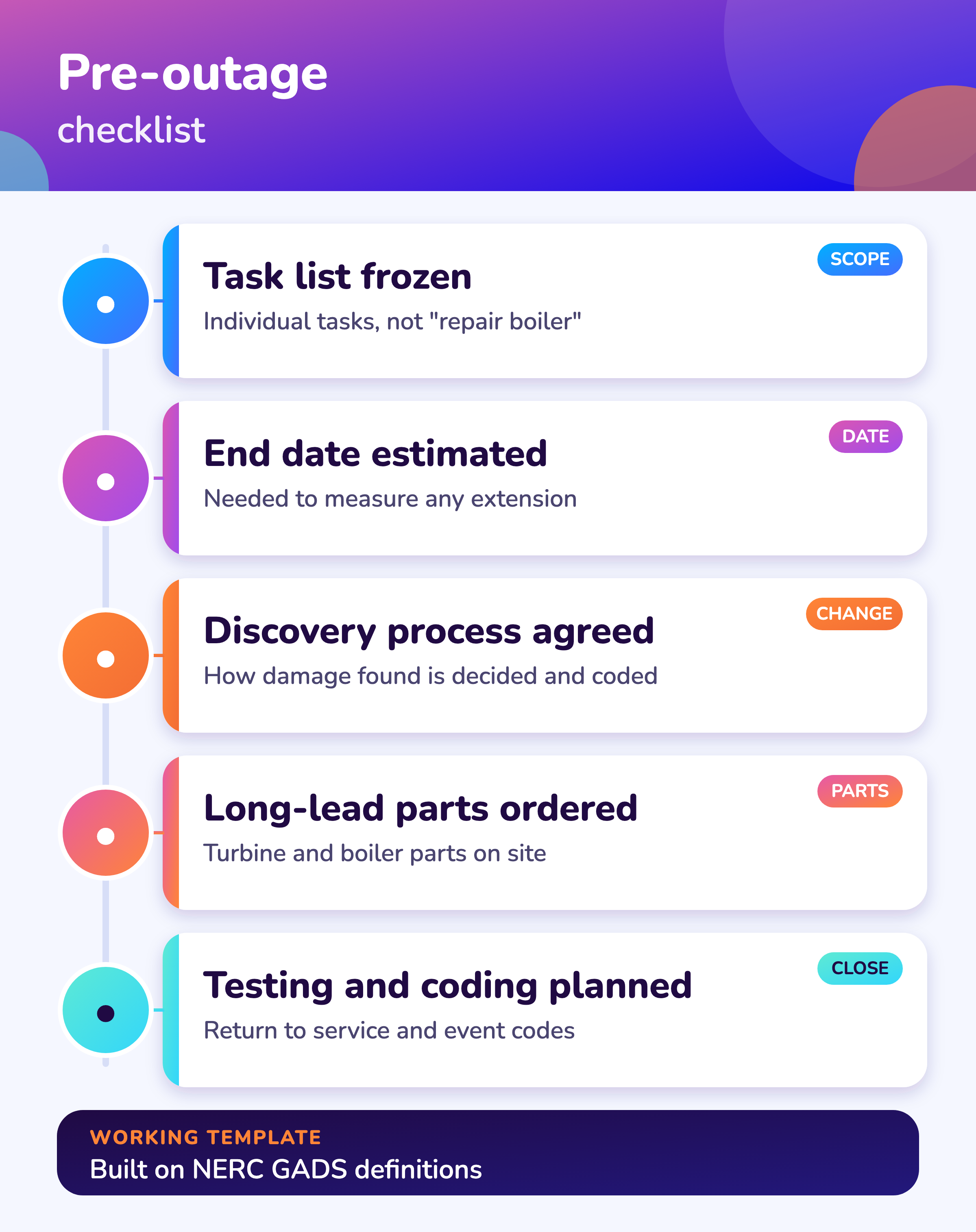
A power plant outage checklist should confirm the frozen task list, the estimated end date, the discovery work process, long-lead parts, permits and testing, and event coding before the unit comes off line.
A free Excel version is available: Power plant outage shutdown checklist (.xlsx). A free Excel version is available: Planned outage factor and outage log (.xlsx).
| Check | Why it matters |
|---|---|
| Task list frozen as the original scope of work | GADS counts only tasks fixed in advance as planned scope; "repair boiler" is not a scope |
| Estimated end date and duration recorded at the start | A planned extension needs an estimate to extend from |
| Discovery work process agreed | Damage found that extends the outage is coded as a forced outage |
| Long-lead parts for turbine and boiler work ordered | Parts arriving late are a common cause of extensions (working template) |
| Permits, isolations and testing planned in the schedule | Testing and return-to-service are part of the outage, not after it |
| Event coding agreed before the outage | Operations and reporting staff code PO, PE, MO and U events the same way |
The table is a working template built on the NERC definitions. The full 40-step list is in the shutdown checklist.
Visuals
Save the outage charts
Two charts for the outage control room. Click either to open it full size.
FAQ
Frequently asked questions
What is a planned outage in power generation?
An outage scheduled well in advance, of predetermined duration, with all tasks fixed in advance as the original scope of work. It can last several weeks and occurs once or twice a year. 1
What is the difference between a planned and a maintenance outage?
A maintenance outage can be deferred beyond the end of the next weekend but must happen before the next planned outage, and it is usually much shorter. 1
What counts as a forced outage?
An outage that cannot be deferred. NERC grades forced outages U1 (immediate), U2 (within six hours) and U3 (before the end of the next weekend). 1
What if damage is found during a planned outage?
Extra time needed to repair damage found during an inspection is coded as a forced outage, not a planned extension. 1
How often do nuclear plants refuel?
Reactors are typically refueled every 18 to 24 months, with outages mostly in spring and fall. A refueling can be completed in as few as 10 days. 2,3
When are power plant outages usually scheduled?
Spring and fall, when demand is lowest, per EIA's ISO New England data (2011) and its 2023 reactor review. 4,3
Is outage reporting mandatory?
In the United States and Canada, GADS reporting has been mandatory since 1 January 2013 for conventional units of 20 MW and larger. 1
Is there a benchmark outage duration for coal or gas units?
There is no published benchmark. Use your own history and the equipment maker's guidance.
Sources
Sources
Definitions come from NERC's GADS instructions (2026) and figures from EIA, with sector and year given in the text. The checklist is a working template. Check the sources for later revisions.
- North American Electric Reliability Corporation, Generating Availability Data System (GADS) Data Reporting Instructions, effective 1 January 2026
- U.S. Energy Information Administration, Nuclear power plants undergo seasonal scheduled outages (23 May 2011)
- US Energy Information Administration, Today in Energy on nuclear refueling outages (8 November 2023)
- U.S. Energy Information Administration, Seasonal maintenance helps keep power online during summer and winter peaks (22 April 2011; ISO New England data)
- Government of India, The Boilers Act, 2025 (Act No. 12 of 2025), Gazette text as published by PRS India
Plan your next shutdown in one system
Book a demo and tell us about your plant. We will show how the module handles your shutdown.